A regenerative DC drive operates in all four quadrants of the torque–speed plane: it can apply torque in the same direction as motion (motoring) or opposite to motion (braking), in either direction of rotation. This is achieved with a dual SCR bridge that can source or sink current from the motor armature, making it a true bidirectional DC motor drive controller.
How regenerative braking feeds energy back into the system: when the load tries to overhaul the motor, the armature back-EMF exceeds the drive's commanded voltage. The second anti-parallel SCR bridge fires at a phase angle greater than 90°, switching from rectifying to inverting mode. Current reverses through the armature and the drive pumps that current back through the AC mains transformer — the kinetic energy of the load becomes real electrical energy returned to the supply, instead of heat dissipated in a dynamic braking resistor.
4-quadrant operation in plain terms: Quadrant I — forward motoring (positive speed, positive torque). Quadrant II — forward braking (positive speed, negative torque, energy regenerated). Quadrant III — reverse motoring. Quadrant IV — reverse braking. A 4Q regenerative SCR drive transitions between all four states seamlessly, without contactors and without waiting for a braking resistor to cool.
Regenerative vs SCR DC motor drives: a standard SCR DC motor drive (also called a non-regen or 1Q/2Q drive) is the right tool for unidirectional, mostly-motoring loads such as pumps, fans, and extruders. A regenerative SCR drive adds a second thyristor bridge so it can both source and sink armature current, returning braking energy to the line. The trade-off is more silicon, more control complexity, and a higher price — paid back quickly on overhauling loads or high-duty braking. For low-voltage or fractional-horsepower duty, a PWM DC motor controller is usually a better fit than either SCR topology — compare all three families on the main DC motor drive controller page.
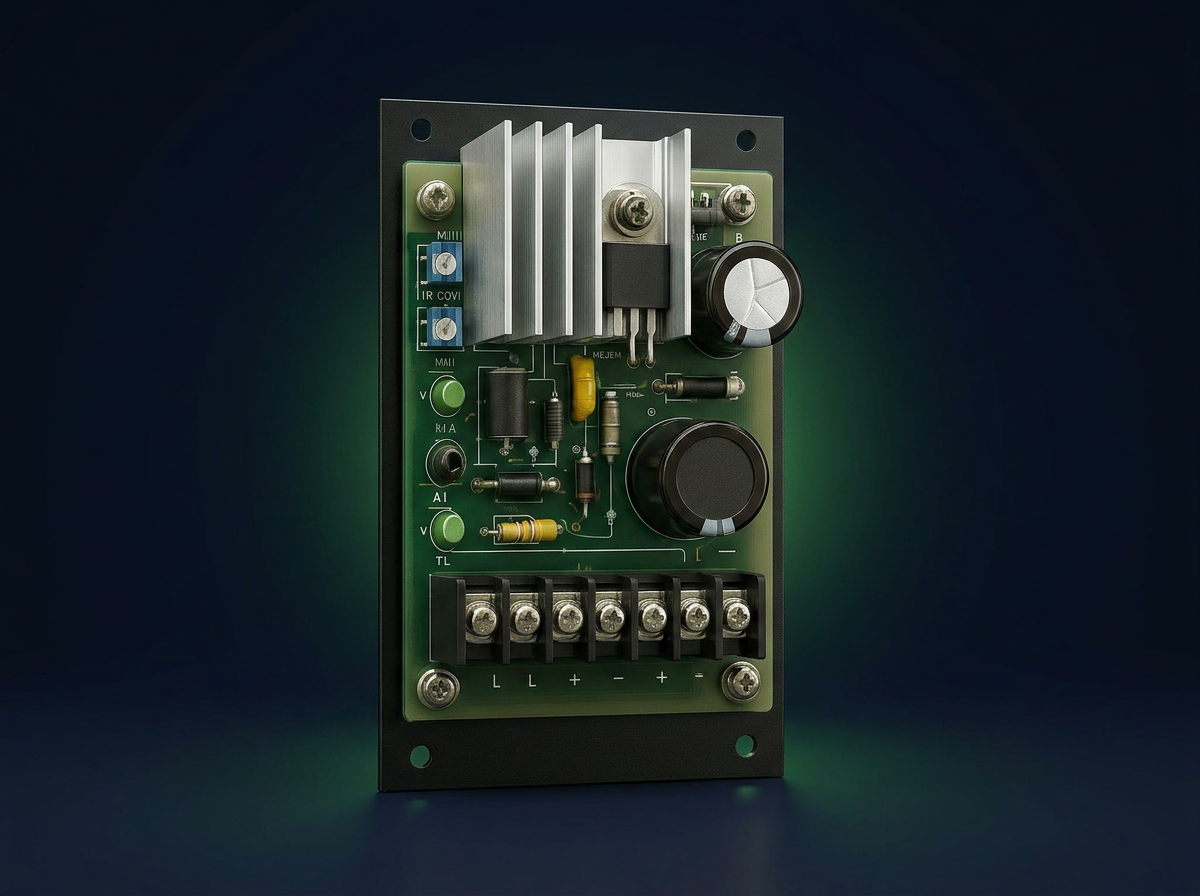
Ameronics offers two regenerative DC drives: Regencore 4Q on chassis and Revoxa 4Q enclosed. Both share the same proven SCR-based four-quadrant core, with tach or armature voltage feedback and isolated control inputs.